Why Enterprise Visual Intelligence Is Becoming Essential for Modern Utilities
Reliability in energy distribution is non negotiable. Outages impact communities, disrupt operations, and erode confidence in critical infrastructure. Asset failures increase regulatory scrutiny and remediation costs. Late detection of defects or risks compounds operational exposure.
Utility leaders carry responsibility for improving asset resilience, reducing unplanned downtime, strengthening compliance reporting, and enhancing workforce productivity across geographically dispersed networks. Traditional inspection models struggle to keep pace with network complexity and the scale of modern infrastructure.
Enterprise visual intelligence changes the operating model. By standardizing detection and analysis through computer vision, a specialized subset of artificial intelligence that enables systems to process and interpret images and video, utilities convert visual data into structured operational insight. Manual review effort declines. Defect classification becomes consistent and auditable. Leaders gain a unified view of network health across regions. Maintenance shifts from routine cycles to risk based decisions grounded in data and measurable performance.
The operational impact is measurable. Inspection teams spend less time on repetitive manual analysis and more time addressing validated risks. Defects are identified earlier and classified consistently across regions. Cross team visibility improves coordination and supports faster decision making. Networks operate with greater reliability and resilience.
Moving From Image Collection to Enterprise Visual Intelligence
Utilities generate more visual data today than at any point in their history. Inspection programs capture imagery from drones, vehicle mounted cameras, fixed monitoring systems, contractor uploads, and legacy archives. The volume of data is significant. The operational challenge is even greater.
Image capture alone does not deliver insight. Many utilities face inconsistencies in image quality, fragmented mission planning, and variable standards across regions and contractors. Scaling inspection programs across distributed networks introduces governance and coordination challenges.
The core constraint is not access to imagery. It is what happens after capture.
Visual data must be structured, governed, and transformed into operational intelligence that drives timely and defensible decisions. Without this transformation, imagery remains an asset that is difficult to operationalize at scale.
The Fragmented Inspection Lifecycle
Traditional inspection workflows often operate in silos. Planning occurs in one system, mission execution in another, and image storage in separate repositories. Condition assessments are documented in spreadsheets, reports are generated independently, and work orders are created outside the inspection workflow.
This fragmentation limits operational effectiveness. Cross team visibility is reduced, escalation pathways slow, and decisions are made without full context. Insights do not flow seamlessly from inspection to action.
Enterprise utilities require integrated workflows that consolidate capture, processing, and analysis within a governed environment. Computer vision standardizes detection and classification, creating a consistent operational foundation across the network.
Improving inspection quality in the field remains essential. Structured mission planning, asset aware flight paths, and consistent capture standards enhance data quality. However, field optimization alone does not solve the governance challenge. High quality imagery must be ingested, analyzed, and operationalized within an enterprise visual intelligence framework.
The opportunity lies at the intersection of field execution and governed intelligence.
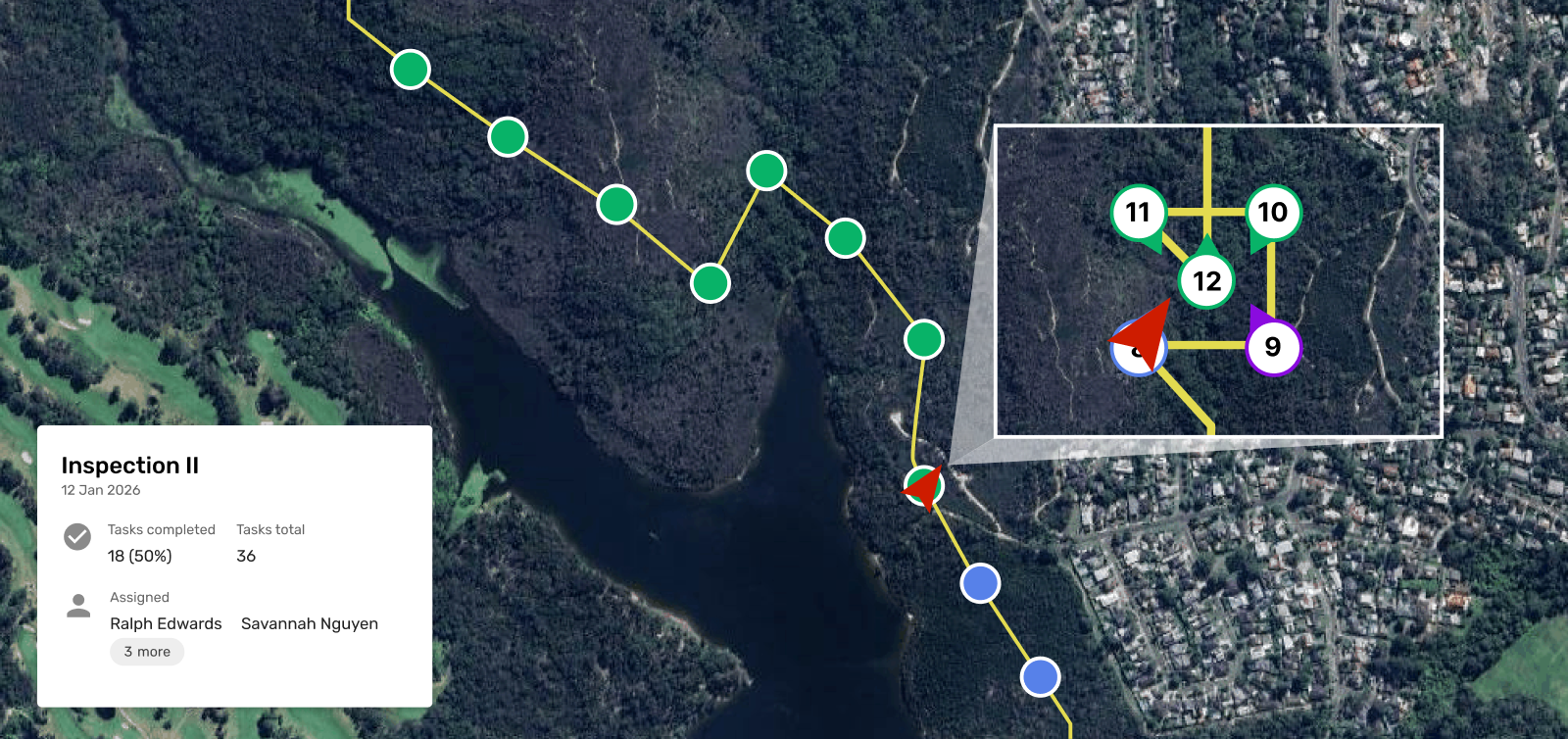
Mission planning with the drone conducting automated power pole inspections.
From Visual Data to Governed Intelligence
Inspection data often resides across multiple systems used by vegetation management teams, asset integrity specialists, and maintenance operations. Fragmentation limits cross team visibility and slows escalation pathways. Decisions are made with incomplete information.
Centralized capture and analysis create shared visibility across operations, asset management, and compliance functions. Enterprise grade visual intelligence requires governed ingestion, asset tagged storage, and structured metadata that supports searchable retrieval by asset ID or defect type.
Secure and auditable data management strengthens governance and compliance. Structured outputs integrate directly with enterprise systems such as EAM and ADMS, enabling operational workflows that translate insight into action.
Unified intelligence improves coordination, supports clear audit trails, and delivers measurable performance outcomes. It becomes part of the operational backbone rather than a disconnected analytics layer.
Without this structure, utilities face delayed defect identification, inconsistent classification, and limited cross team visibility. Governance transforms imagery into operational infrastructure.
Standardizing Detection Across the Network
Manual inspection processes introduce variability. Different inspectors may interpret defects differently, severity scoring can drift over time, and regional standards may diverge. Contractor driven workflows can amplify inconsistency.
Computer vision standardizes detection and classification within a governed framework. Automated models identify vegetation encroachment, insulator contamination, corrosion, and structural degradation with consistent criteria. Defect classification becomes repeatable and defensible across the network.
The value of standardization is not limited to speed. It ensures consistency in classification and reporting, creating a single operational view of network health. Maintenance decisions are informed by data rather than subjective interpretation.
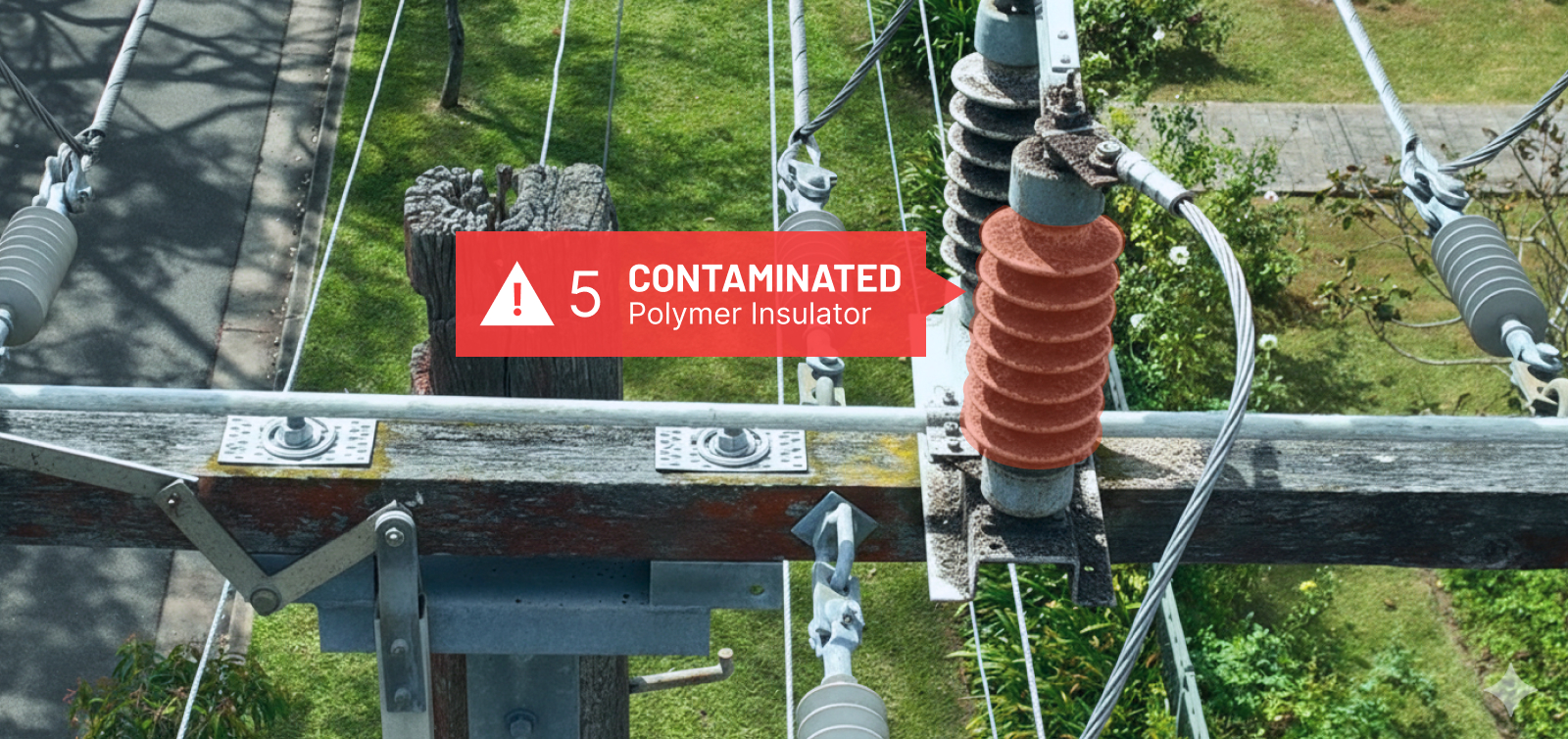
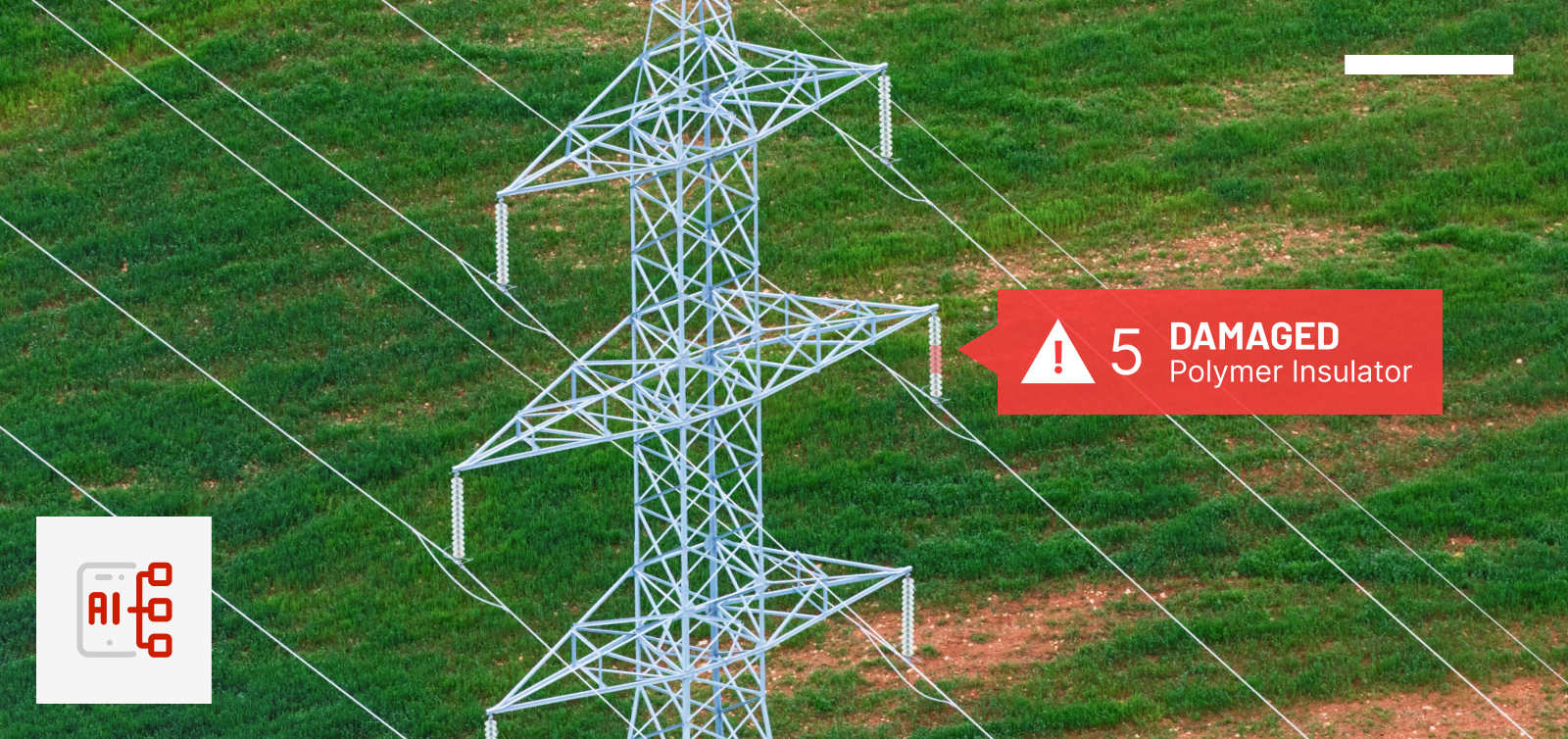
High severity contamination detected on an polymer insulator by the computer vision system.
Reducing Cognitive Load While Preserving Expertise
Computer vision is designed to enhance engineering expertise, not replace it. Inspection teams often review thousands of images per program, creating cognitive burden and operational inefficiency.
Automated detection accelerates identification and prioritization of risks. Subject matter experts validate findings and determine remediation actions. This human in the loop model preserves domain expertise while improving operational efficiency.
The approach delivers greater consistency, fewer false positives, and increased confidence in defect classification. Maintenance cycles become faster and more targeted. Inspection teams focus on decision making rather than repetitive analysis.
Enterprise visual intelligence reduces cognitive load while strengthening operational control.
Making Insights Directly Actionable
Detection alone is insufficient. Operational intelligence must translate insight into action. Defects should be linked to asset IDs, severity scores aligned to maintenance frameworks, and structured outputs integrated with enterprise systems.
Maintenance workflows and regulatory reporting processes benefit from structured intelligence. AI without integration remains annotation. AI with integration becomes operational capability.
Actionable intelligence drives measurable outcomes. Networks operate with greater reliability, compliance is strengthened, and operational efficiency improves.
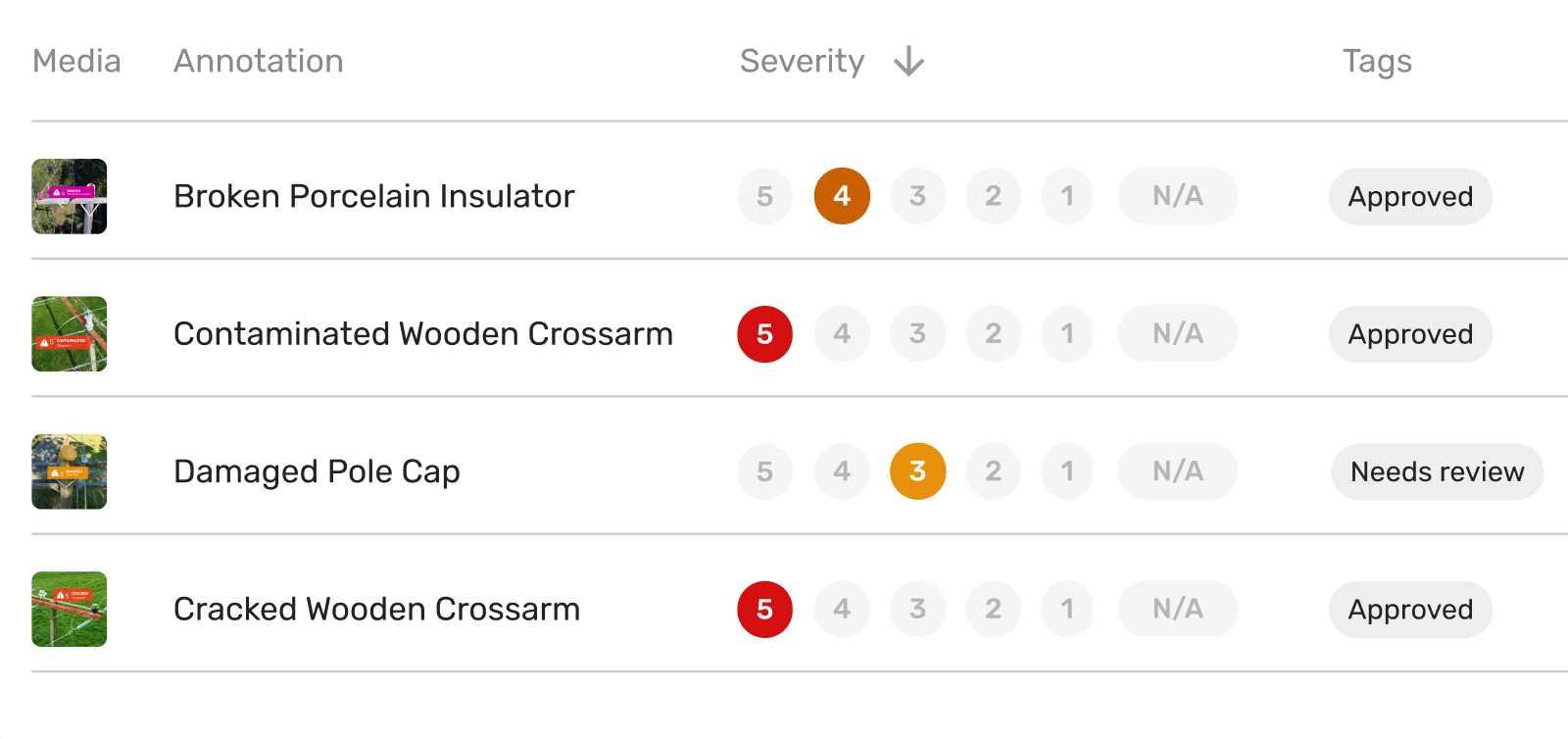
Actionable report showing asset severity levels and progress of review tagging.
Visibility Across the Enterprise
Modern utilities operate across dispersed geographies and complex operational environments. Fragmented inspection workflows limit organizational visibility. Teams see only partial information.
Enterprise visual intelligence creates network wide visibility. Cross region defect analysis, workforce coordination, and audit trails support operational governance. Program level performance becomes measurable and transparent.
Inspection outcomes shift from isolated reports to enterprise insights that inform strategic decision making.
The Strategic Shift
Utilities must improve inspection planning and execution while ensuring that imagery translates into operational outcomes. The future of utility inspection combines coordinated field operations with enterprise grade visual intelligence.
Capture, process, detect, and act defines the operational workflow. Each stage strengthens governance and insight. Integrated systems deliver scalability and consistency across distributed networks.
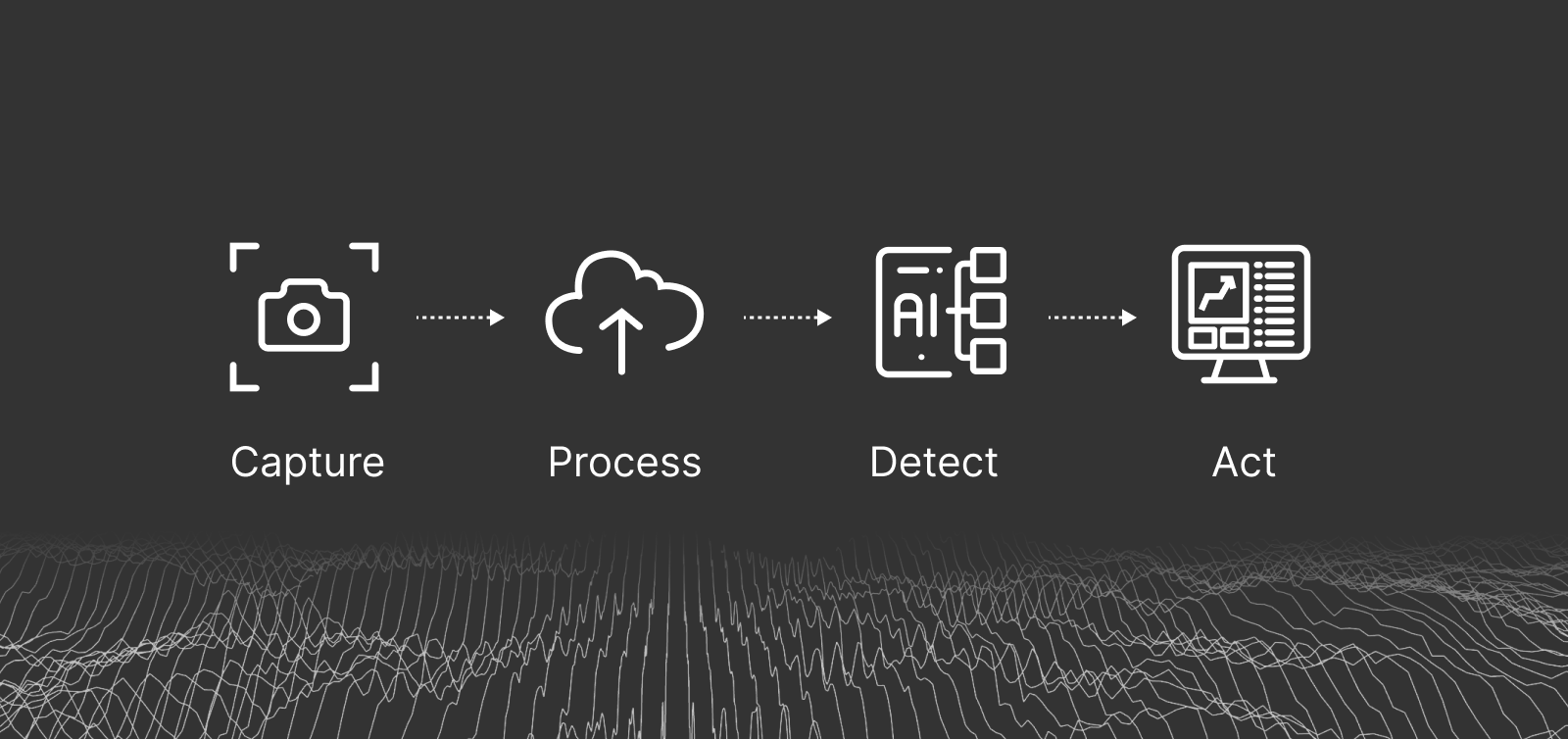
Automated Asset inspection workflow.
Utilities that embrace this shift will achieve greater operational control, improved network reliability, and measurable performance outcomes. Visual intelligence becomes a strategic capability rather than a supporting function.