When Unleash live announced our deep integration with NVIDIA L4 Tensor Core GPUs and Vision Language Models, the response confirmed something we already understood operationally: the infrastructure sector is not waiting for physical AI to arrive. It is working out how to govern and deploy it at scale.
We want to revisit that announcement, not to repeat a press cycle, but because the signals from NVIDIA's trajectory deserve a more deliberate commercial read. There are lessons here for every infrastructure operator managing visual data across distributed sites.
What NVIDIA Is Actually Building
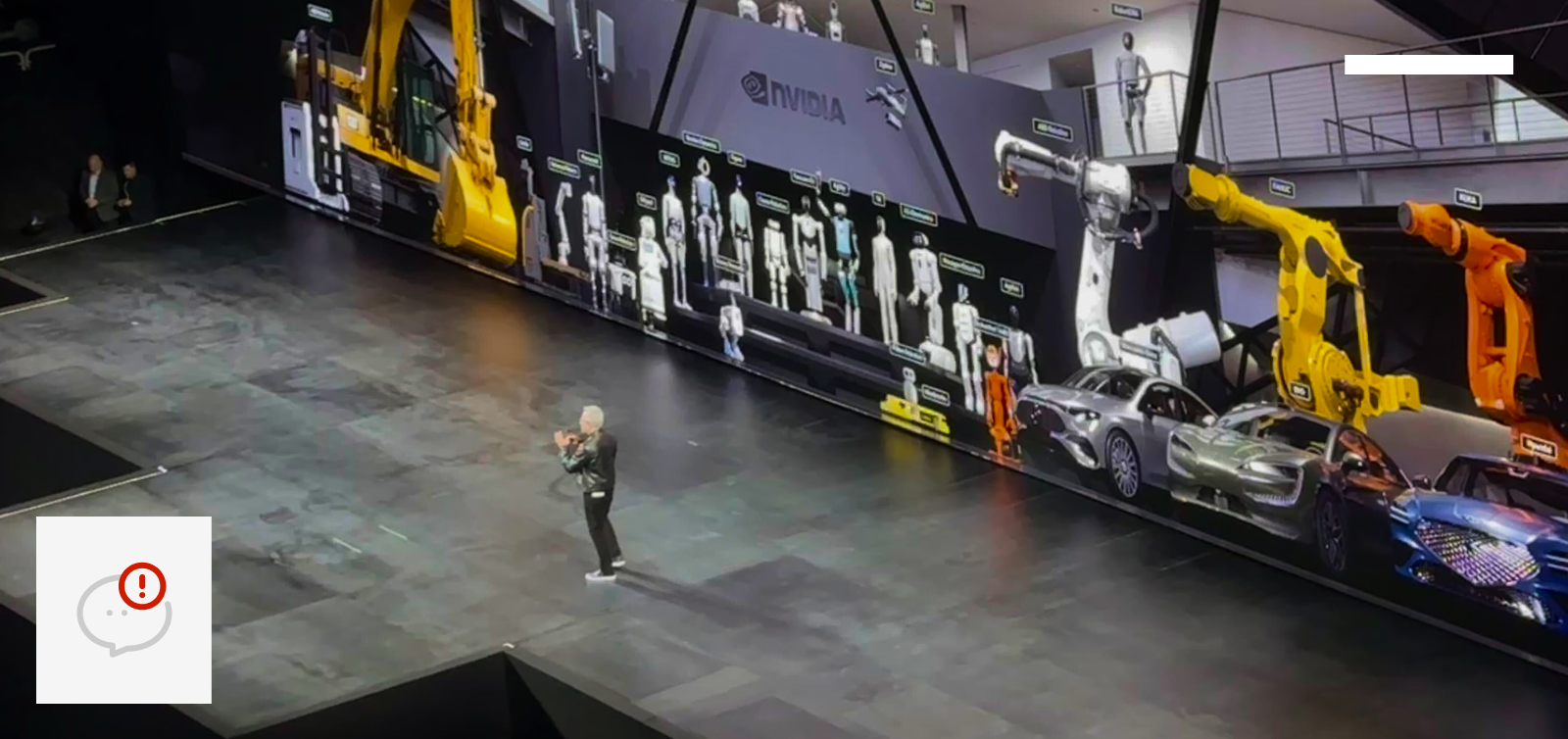
NVIDIA is not just a chip company. It is rapidly becoming the foundational layer for a new class of physical AI infrastructure, and the data centre real estate required to support it is one of the defining industrial investment stories of this decade.
The United States and Australia are particularly well positioned to capture this. Both have the regulatory frameworks, the energy access, and the enterprise demand to become anchor markets for next-generation compute infrastructure. For Australia specifically, the combination of sovereign data requirements, critical infrastructure investment, and geographic positioning in the Asia-Pacific corridor makes this more than a technology trend, it is a structural economic opportunity.
Unleash live is built on NVIDIA. That is not a marketing claim. It is an architectural decision that compounds in value as NVIDIA's stack matures.
Unpacking The Key Insights
1. Processing velocity is an operational variable, not a technical specification
Our NVIDIA L4 integration sustains real-time inference at 33ms (30fps) across concurrent multi-site, multi-camera deployments. The 120x performance improvement over CPU-only pipelines is not a benchmark exercise, it is the difference between a monitoring capability and an operational one.
For COOs and VPs of Infrastructure managing distributed asset networks, latency is directly correlated to exposure. Every second between a thermal anomaly appearing on a transformer and an operator receiving an actionable alert is a second of unquantified risk.
The architecture removes that gap.
2. Vision Language Models changed the deployment economics
Prior to VLM integration, deploying computer vision against a new use case required data labelling, model training, validation, and deployment, a cycle measured in months, not days.
NVIDIA-optimised VLMs running on the Unleash live platform allow operations teams to query live video using natural language on day one. No retraining cycle. No data science sprint. No delay between identifying an operational need and acting on it.
For enterprise programs operating across dozens of sites, this compresses time-to-operational-value in a way that changes procurement logic entirely.
3. Hybrid edge and cloud is not a compromise, it is the architecture
The Unleash live platform deploys across cloud, on-site processing, and connected drone infrastructure. Each layer is governed centrally. Each layer is hardware-agnostic.
This matters because infrastructure operators do not get to choose between data sovereignty and operational performance. They require both. Our hybrid edge and cloud architecture delivers both, within a standardised enterprise deployment model that does not require bespoke engineering at each new site.
What This Means for Utilities, Mining, and Transport
Unleash live, built on NVIDIA, is rapidly becoming a production-grade worker for mission-critical digital workflows across the sectors that keep economies operational.
Utilities and Energy: Computer vision applied to drone-captured visual data across transmission and distribution networks detects asset defects, vegetation encroachment, insulator damage, and thermal anomalies at a scale and consistency no manual inspection program can match. The output is a governed, auditable record that directly reduces exposure on SAIDI/SAIFI and STPIS regulatory metrics. These are not pilot outcomes, they are production deployments.
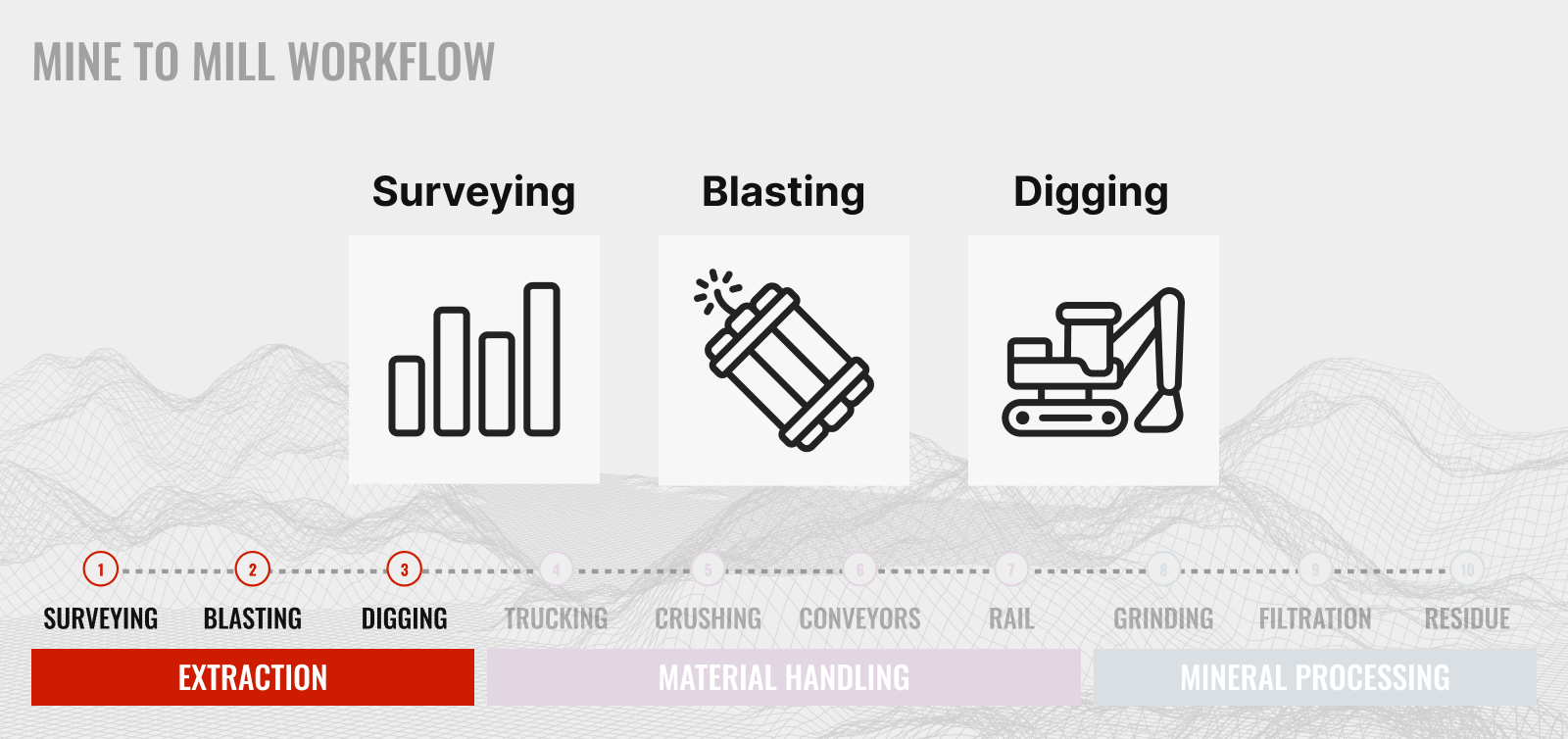
Mining: Computer vision applied to visual data across haul roads, processing facilities, and pit infrastructure identifies equipment condition, stockpile variance, and site safety exposure in time to act on it. Faster anomaly identification reduces unplanned downtime and contractor cost without increasing headcount.
Transport: Computer vision applied to visual data across road, rail, and port networks supports incident detection, perimeter monitoring, and asset condition tracking at real-time frame rates, delivering a verifiable record for operational, regulatory, and insurance purposes.
Across all three verticals, the Unleash live platform already deploys physical AI, coupling infrastructure visual data insights with an efficient sensor, hardware, and network stack that captures, processes, detects, and acts at enterprise scale.
Born in NSW. Deployed Globally.
Unleash live was founded in New South Wales, Australia. That origin is operationally significant, not incidentally biographical.
Australia's critical infrastructure environment, regulatory complexity, geographic scale, extreme operating conditions, and early enterprise adoption of autonomous inspection, gave us a proving ground that most enterprise software companies never access. We built governance models, deployment architectures, and operational workflows in one of the world's most demanding infrastructure contexts.
Those learnings are now being taken globally. Unleash live is now working with leaders in the USA and Europe on physical AI rollouts.
NSW and Australia's positioning within NVIDIA's physical AI infrastructure buildout is not separate from Unleash live's commercial trajectory. It is part of the same thesis: that the countries and companies that govern visual data at scale will define the next layer of industrial operational intelligence.
We are proud to be part of that story, and committed to building it from a base that NVIDIA, AWS, and enterprise infrastructure operators across utilities, mining, and transport are now validating at scale.
The Practical Implication for Enterprise Programs
If you are evaluating or expanding a visual data program across multiple sites, three things are now structurally true:
- Deployment programs that previously required extended model development cycles can reach operational value significantly faster.
- Multi-site standardisation is achievable without bespoke engineering at each location.
- The platform scales with the operation, governed, hardware-agnostic, and production-grade from day one.
The architecture is not experimental. It is deployed. Scaling globally.