There is a structural problem embedded in how most mining operations monitor and inspect their assets and processes, and it is expensive.
The current model is familiar: inspections are scheduled, crews are dispatched, footage is collected, reports are compiled. At each stage, time passes. Between each inspection, the site continues to operate. Conveyors run, crushers process, tailings ponds settle, heavy vehicles cycle. Largely unseen. The assumption holding this model together is that nothing critical will happen between inspection cycles. That assumption is increasingly difficult to defend.
The mining sector's operating environment has changed. Regulatory scrutiny around tailings dam stability, methane detection, and environmental containment has intensified. Contractor costs have risen. Asset replacement cycles are under pressure. What is less well understood is the degree to which the periodic inspection model actively creates exposure to each of these risks.
This is the monitoring gap, closing it is now an enterprise priority.
Why Periodic Inspection Has a Built-In Ceiling
Periodic inspection was designed for a world where capturing visual data was labour-intensive and asset-by-asset. You scheduled a team, walked a corridor, reviewed footage. The output was a point-in-time record.
That model made sense when it was the only option. It no longer is.
The ceiling it imposes is structural. You can optimize inspection frequency, reduce crew deployment costs, and improve reporting turnaround. But you cannot see what happens between cycles. A hot roller developing along a conveyor belt, a filter press approaching a blowout condition, a containment anomaly at a tailings facility: these events do not wait for the next scheduled inspection. They develop, escalate, and in some cases cause material damage within hours and sometimes within minutes.
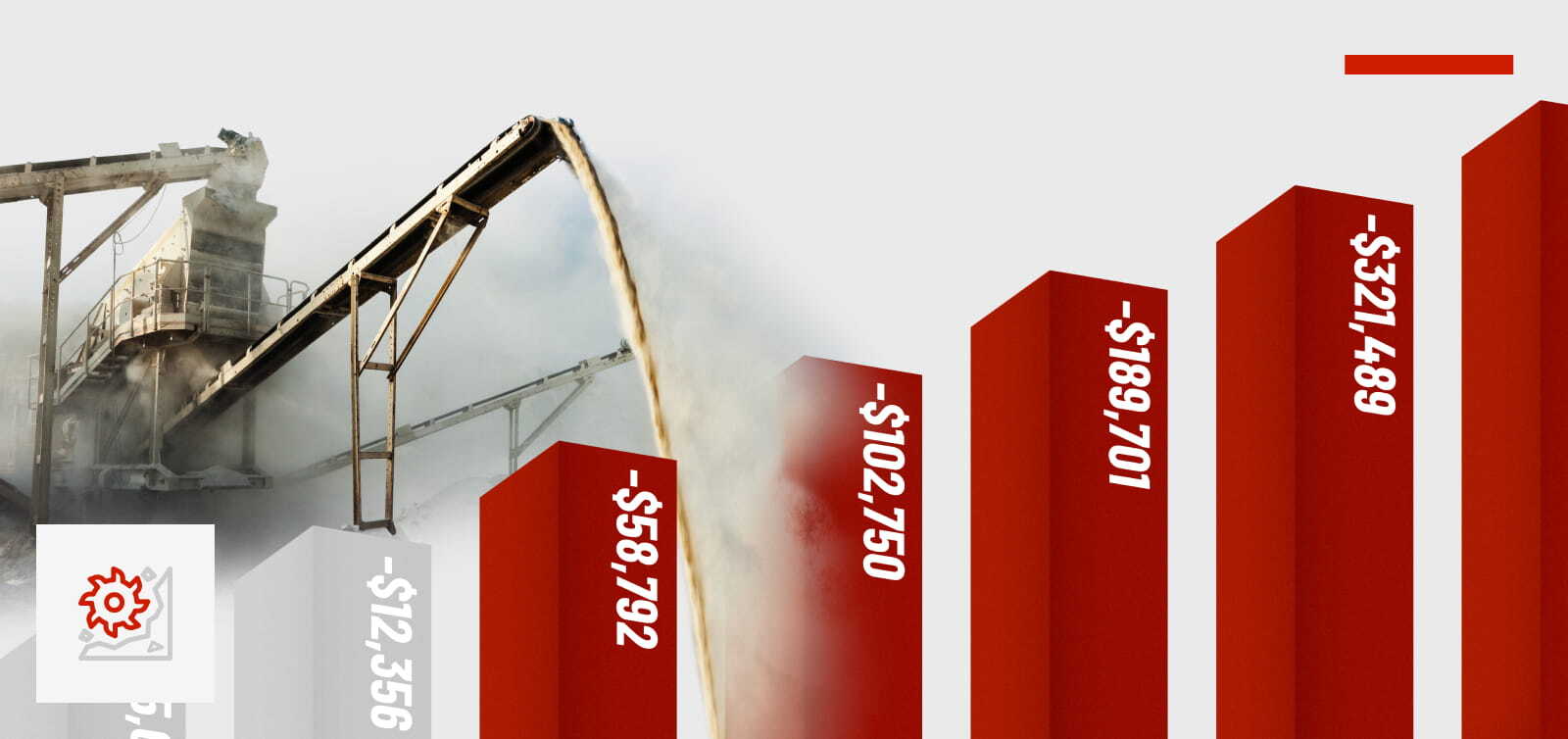
The financial consequence is asymmetric. The cost of a scheduled inspection program is predictable and manageable. The cost of a single unplanned shutdown, covering equipment damage, production loss, contractor mobilisation, and regulatory notification, is not.
Three metrics define that exposure in terms that belong on an executive dashboard.
Hot Roller Detection on Conveyor Belt
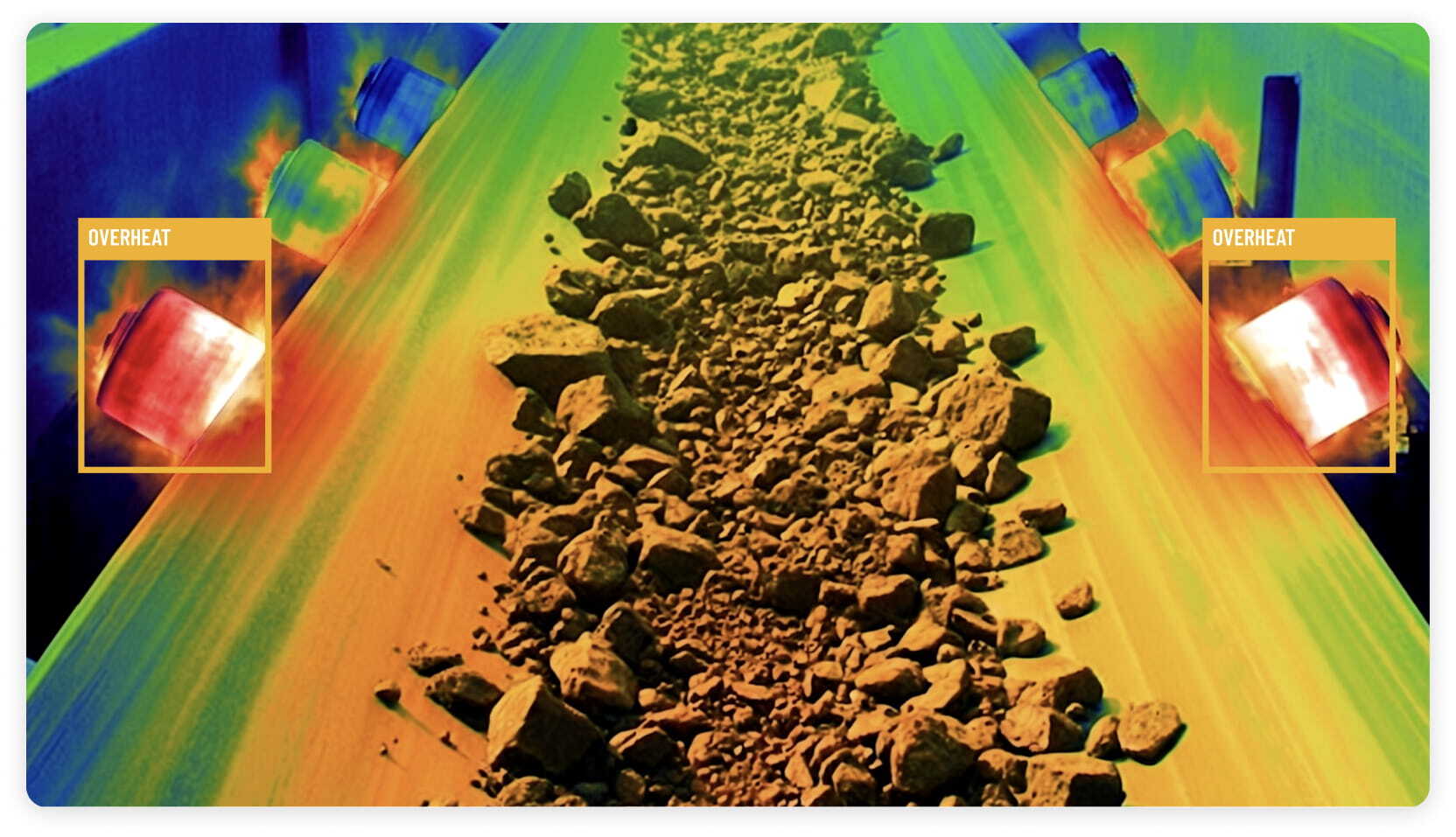
Unplanned downtime hours: The conditions that precede most equipment failures are visually detectable before they cause a stoppage. The window between first visible indication and failure event is where continuous monitoring operates, and where periodic inspection is absent by design.
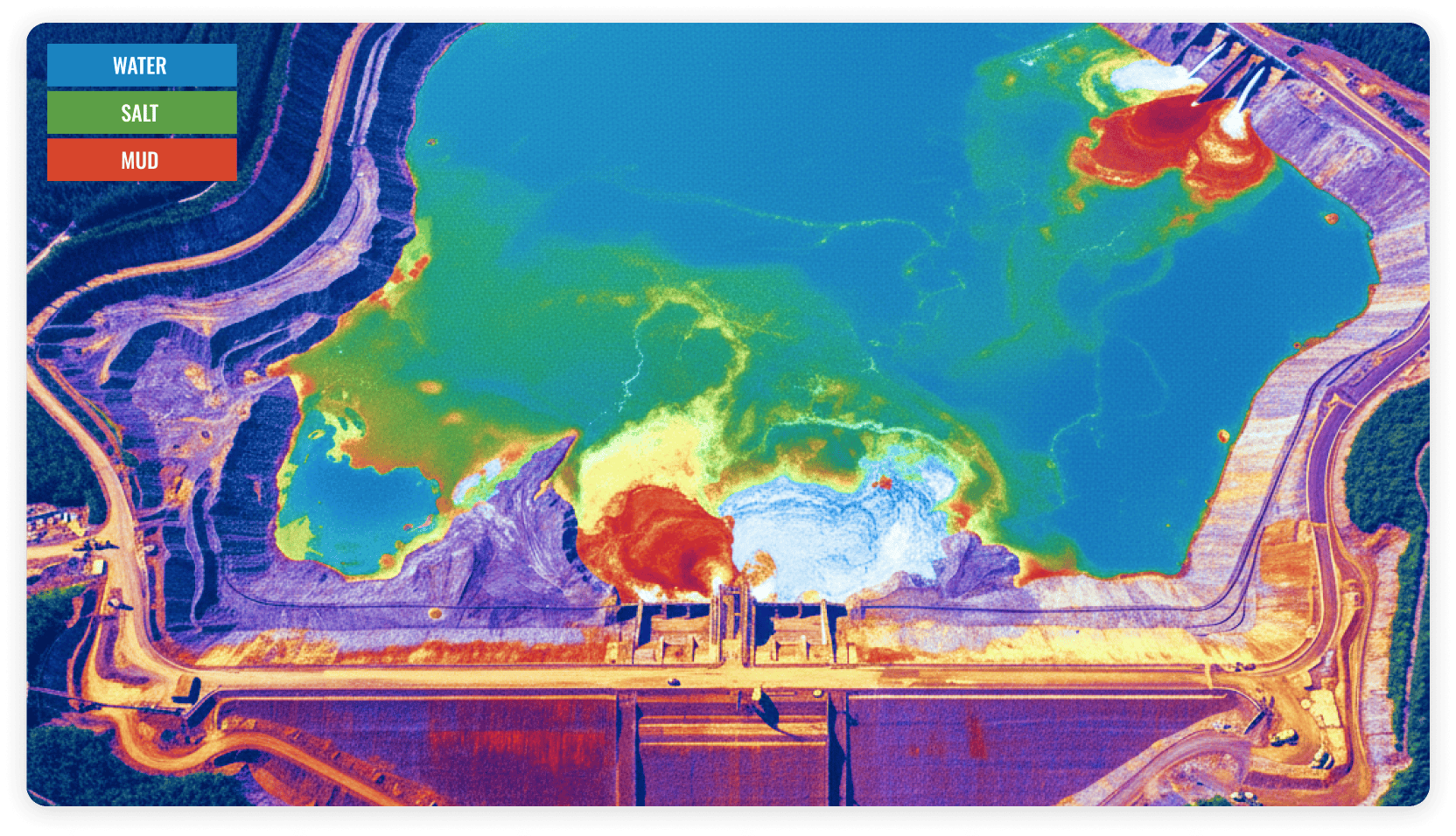
Monitor Tailings Dam Stability
Planned versus unplanned maintenance ratio: Operations running assumption-based maintenance schedules carry significant hidden cost. Maintenance happens when the calendar says so, not when asset condition warrants it. The result is over-servicing of healthy assets and under-servicing of assets that deteriorate between cycles.
Overall equipment effectiveness: Continuous visual monitoring closes the gap between scheduled inspection and actual asset condition. Assets run closer to operational potential when condition data is current, not weeks old.
What Continuous Monitoring Changes
The shift from periodic inspection to continuous site monitoring is not an incremental improvement to the existing model. It is a structural change in how visual data generates operational value.
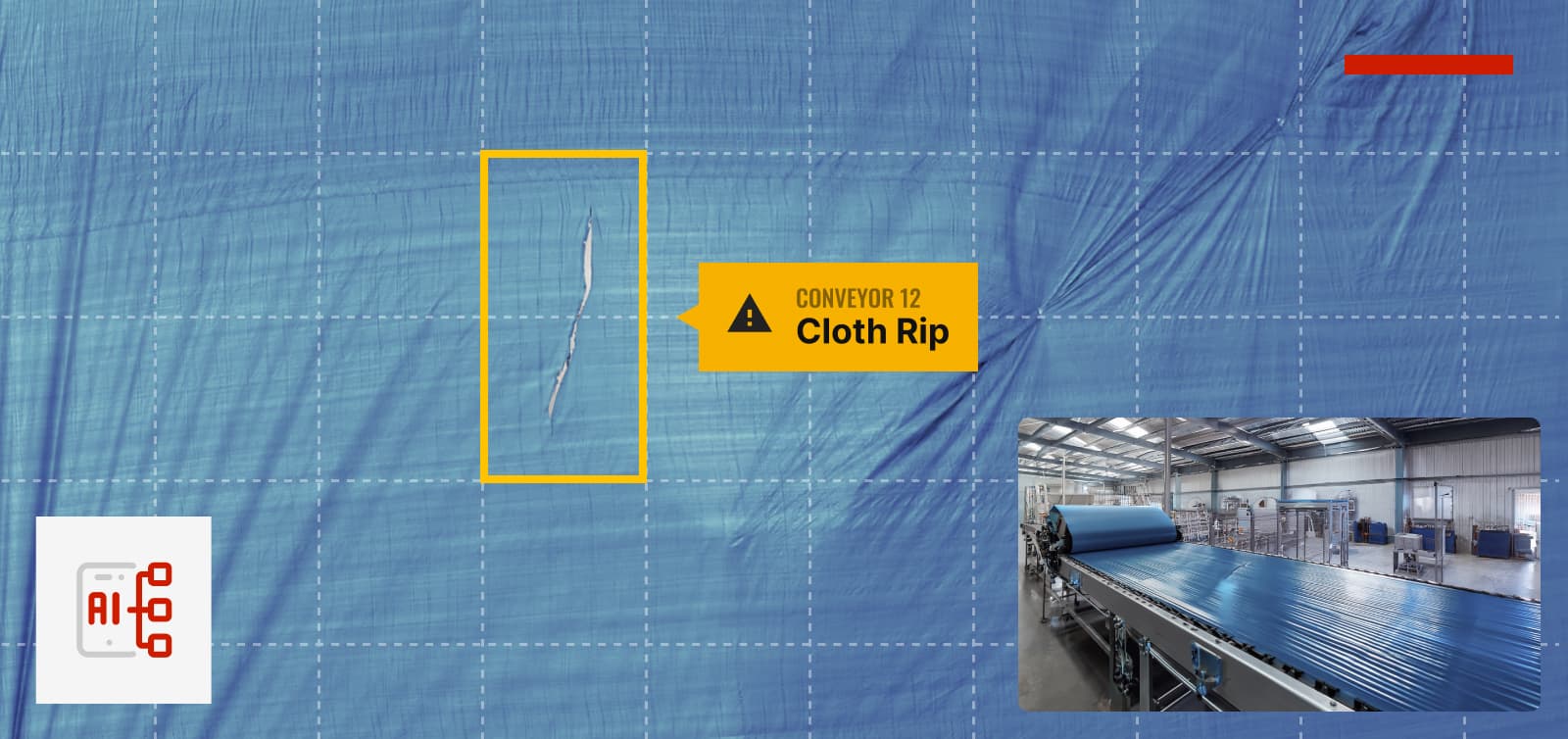
A continuously monitored site captures, processes, and acts on infrastructure visual data in real time. Cameras, sensors, and UAV systems feed into a governed intelligence layer that detects anomalies, triggers alerts, and creates auditable records without requiring a human to review every frame. One camera stream can run multiple computer vision models simultaneously, routing asset condition data to a reliability team, safety compliance alerts to a safety manager, and proximity breach notifications to a control room, all from the same source.
Across the mining value chain, this changes the risk and cost profile in specific ways.
GET Wear Detection
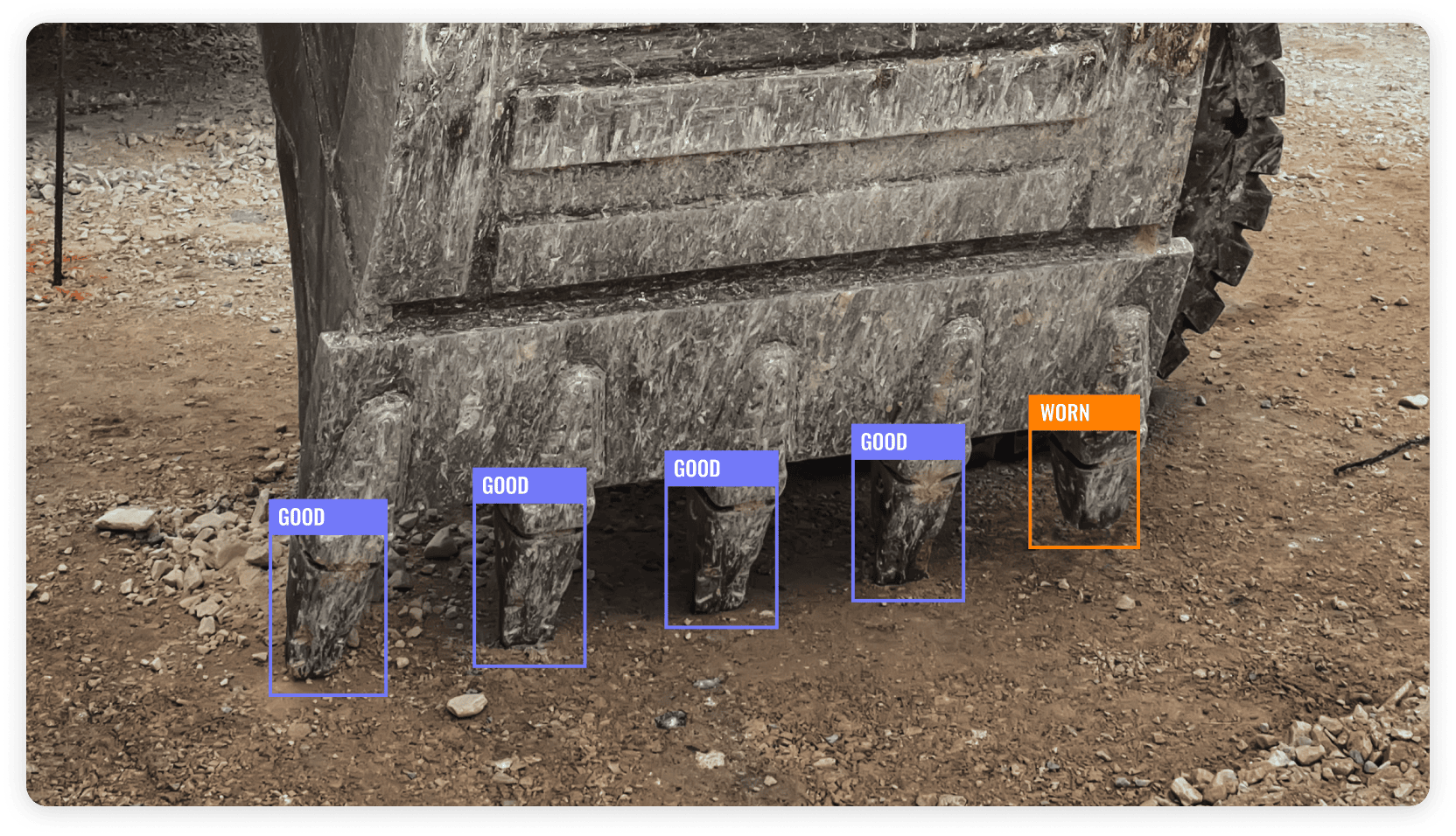
Ground Extraction Tools: GET wear and missing tooth detection moves from post-shift manual checks to continuous automated detection, reducing the risk of downstream crusher damage. Bucket payload monitoring delivers real-time production data without crew deployment.
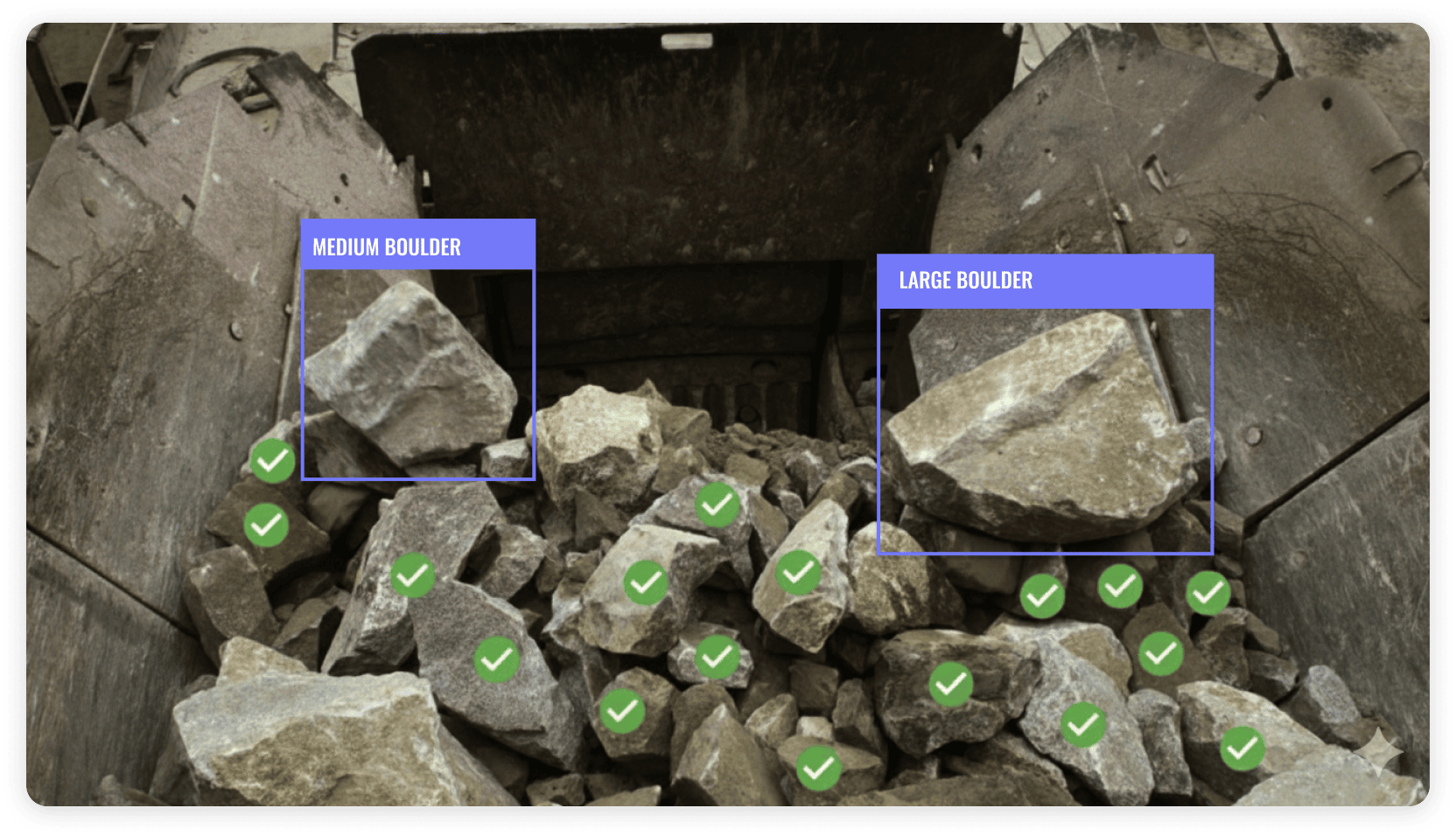
Crusher Boulder Size Detection
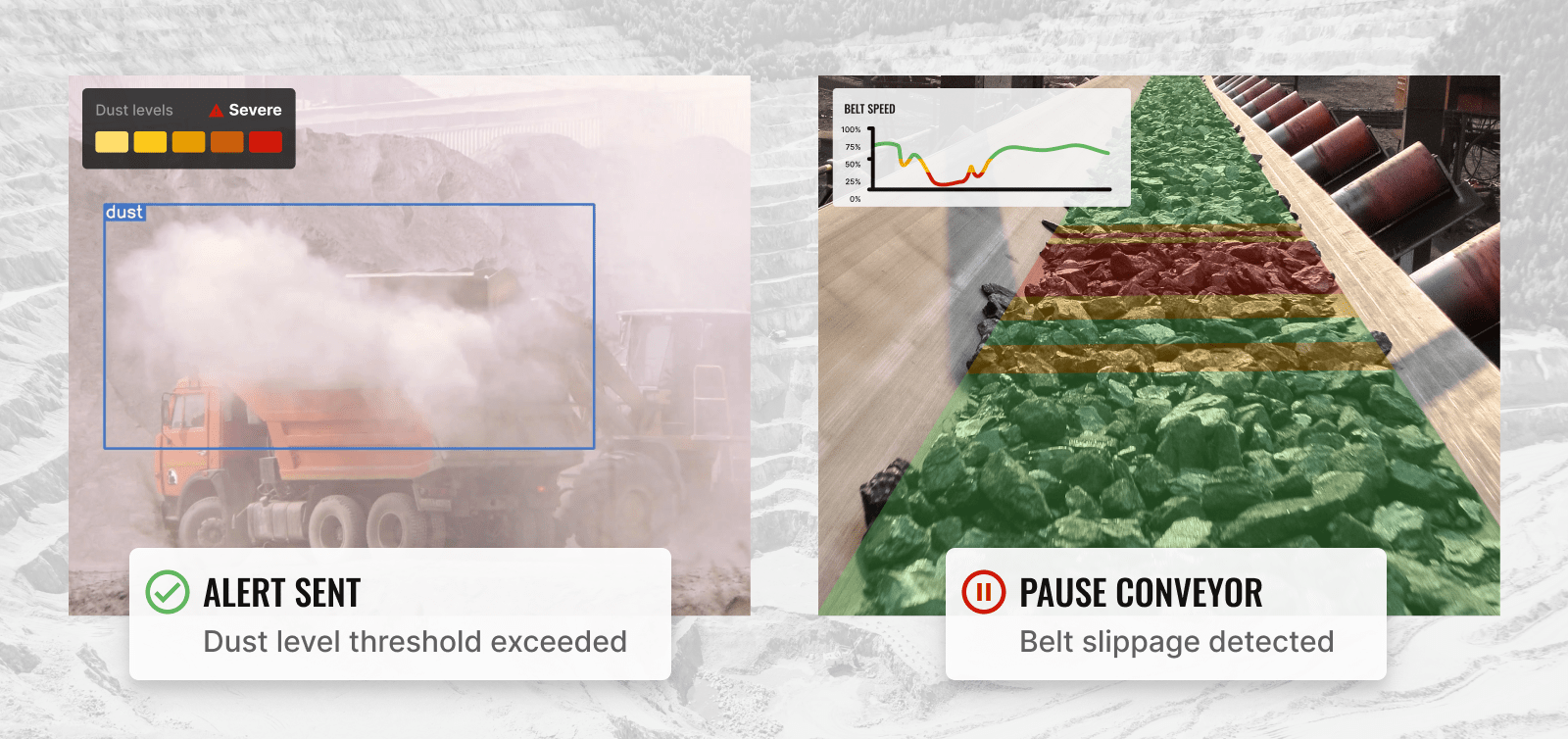
Material Handling: Crusher analytics and boulder detection flag feed conditions before they become stoppages. Conveyor monitoring shifts from reactive maintenance to condition-based intervention. Hot roller detection operates continuously, reducing the risk of belt fires and associated production loss.
Mineral Processing and Tailings Management: Filter press health monitoring with blowout prevention logic reduces both production loss and environmental exposure. Tailings dam stability monitoring moves from scheduled surveys to continuous surveillance. Methane detection and containment loss monitoring create auditable compliance records without manual inspection cycles.
Continuous monitoring reduces the window of undetected risk. Smaller windows mean fewer unplanned events. Fewer unplanned events mean lower OPEX, deferred CAPEX, and reduced regulatory exposure.
Compliance is Mandatory, Automate It.
Mandated monitoring requirements for tailings facilities, emissions, and safety-critical zones are expanding across jurisdictions. The compliance burden is shifting from periodic to continuous evidence.
Regulatory compliance rate: Mandated monitoring requirements met automatically, documented, timestamped, and audit-ready without additional headcount, represent a fundamentally different compliance posture than inspection reports reconstructed after the fact.
Time to evidence: When regulators, insurers, or auditors make a request, the question is not whether evidence exists but how quickly it can be produced. Continuous monitoring generates timestamped, classified, source-linked records automatically. Operations that cannot produce this evidence on demand face audit risk and the operational cost of manual reconstruction.
Operations that build automated monitoring infrastructure now are building compliance capacity ahead of the requirement curve. Operations that wait are accepting escalating retrofit cost and regulatory exposure.
The Enterprise Requirement: Governance at Scale
Isolated monitoring deployments do not constitute an enterprise monitoring capability. They constitute a pilot. And the mining sector has accumulated a significant inventory of pilots that have not scaled.
The reason is governance. Without a standardised architecture for how visual data is captured, processed, stored, and acted upon across sites, each deployment remains operationally siloed. Data formats differ. Alert logic is inconsistent. Reporting cannot be consolidated. When a regulatory enquiry or insurance review requires cross-site evidence, the data cannot be assembled.
Enterprise-grade continuous monitoring requires a platform architecture that addresses the full data lifecycle. Capture must be hardware-agnostic, with no proprietary equipment mandates and no rip-and-replace of existing infrastructure or video management platforms. Processing must occur close to the source where data sovereignty requires it, with cloud consolidation available for portfolio-level visibility. Detection logic must be governed through a managed model library, not ad hoc scripts managed by individual site teams. Action must be integrated into existing operational workflows, with outputs reaching SCADA, PLCs, and enterprise platforms including SAP, IBM Maximo, AVEVA, and SafetyCulture, not an isolated dashboard that sits outside the workflow.
This is the architecture distinction between a monitoring product and a monitoring platform. The former solves a localized problem. The latter becomes the visual data backbone of the enterprise.
The Commercial Case
The financial argument for continuous site monitoring requires a straightforward accounting of present costs. A single avoided crusher stoppage, conveyor belt fire, or filter press blowout typically offsets the operational cost of a multi-site monitoring program for a significant portion of the year. The exposure is not hypothetical. It is the known cost of events that periodic inspection programs detect after the fact, or not at all. Periodic inspections and maintenance is a human led endeavour, condition led inspections and maintenance are automated and the cost is negligible.
The question facing mining operations leadership is not whether continuous site monitoring is technically feasible. It is. The question is whether the organization has the architecture to capture its value at enterprise scale, or whether it will continue to manage monitoring as a collection of site-level pilots with no common data standard and no ability to benchmark performance across the portfolio.
Unleash live is the infrastructure layer that closes that gap. It standardises how mining operations capture, process, detect, and act on infrastructure visual data across sites, across workflows, and across the regulatory environments in which they operate.
The monitoring gap is a cost. Closing it is a decision!
Request an Operational Benchmark Review to assess your current monitoring coverage against production uptime and regulatory risk exposure across your site portfolio.